
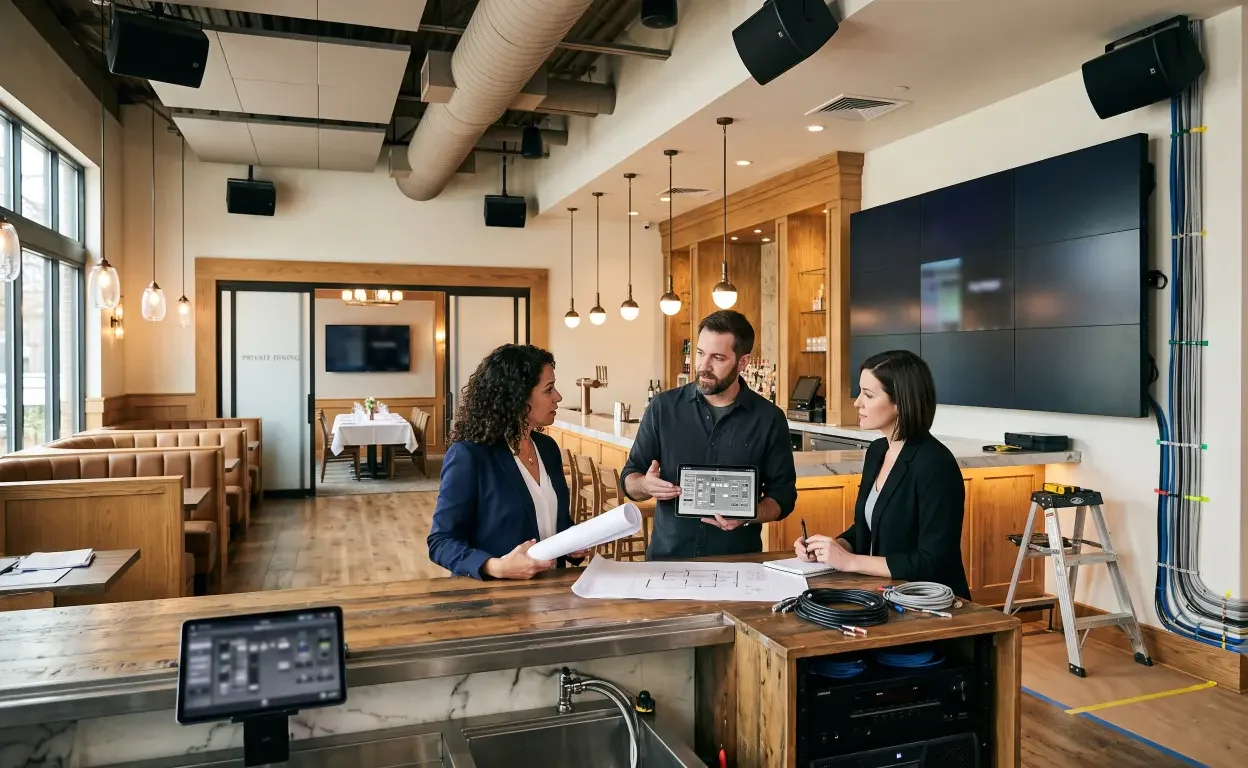
A memorable restaurant, bar, or hospitality space is not built on food and decor alone. Guests also notice how the room feels, how easy it is to hear a conversation, whether the big game looks sharp from every seat, how the lighting changes as the evening develops, and whether private rooms feel polished when a group books an event.
That is where hospitality AV installation becomes more than a technical upgrade. The right audio, video, lighting, control, and network plan can help a restaurant or bar create a stronger guest experience for sports, events, private dining, entertainment nights, and everyday service.
AVI Group designs and installs custom AV, smart automation, lighting, networking, and commercial AV systems for Atlanta-area homes and businesses. For hospitality venues, the goal is not simply to mount more screens or add louder speakers. The goal is to design an environment that feels intentional, easy for staff to operate, and aligned with how guests actually use the space.
Start With the Guest Experience, Not the Equipment
The biggest mistake in restaurant AV planning is starting with products before defining the experience. A restaurant owner may ask for a video wall, more speakers, or a private room display, but the better first question is: what should guests be able to do in this space?
A sports bar may need high-impact viewing from multiple angles. A private dining room may need discreet presentation capability for business dinners, rehearsal dinners, birthday events, or nonprofit gatherings. A cocktail lounge may need warm background music, elegant lighting, and simple source control. A patio may need weather-aware audio and outdoor viewing options.
Once the experience is defined, the system can be designed to support it. That approach prevents the venue from becoming a collection of disconnected screens, speakers, remotes, and cables.
Sports Bar Video Walls Need More Than Big Screens
A sports bar video wall and audio plan should consider sightlines, viewing distance, screen brightness, content sources, control, and how sound will work during busy service. A large display may look impressive, but it needs to be visible from the seats that matter.
Before choosing screens, restaurant owners should ask where guests will sit or stand during high-traffic events. Can guests at the bar, booths, tables, and lounge areas see the main display? Are there columns, soffits, windows, or fixtures blocking the view? Will secondary screens be needed for side angles or separate games?
A good sports viewing setup should also be easy for staff to operate. If changing games requires a manager to juggle multiple remotes and inputs during a rush, the system is too complicated. Control simplicity should be part of the design from the beginning.
Audio Matters as Much as the Picture
In hospitality spaces, louder is not always better. Guests want energy, but they also want comfort. A system that sounds exciting during a game can become exhausting if the volume is uneven, harsh, or too loud in certain areas.
Audio zoning helps solve this. A bar, dining room, patio, private room, and entry area may each need different volume levels or sources. During a game, the bar may need the broadcast audio while the dining room keeps lower background music. During a private event, the reserved room may need a microphone, presentation audio, or a dedicated playlist.
Speaker placement, amplifier planning, acoustic treatment, and control setup all affect whether the system feels polished or frustrating. The goal is clear, balanced sound that supports the mood of each area.
Private Dining Rooms Should Be Ready for More Than Dinner
Private dining room AV setup is a strong opportunity for restaurants and hospitality venues. A private room can host corporate dinners, birthday celebrations, rehearsal dinners, wine tastings, networking events, training sessions, watch parties, and community gatherings.
That flexibility requires planning. The room may need a display or projector, discreet speakers, wireless presentation capability, microphone support, camera or conferencing options, lighting scenes, and simple controls. It should also feel clean and elegant when the AV is not in use.
A well-designed private room can shift from dinner ambience to presentation mode without visible clutter. That makes the space more useful and more professional for guests who expect a polished event experience.
Bar Entertainment Systems Should Support the Whole Night
A bar entertainment system Atlanta venue owners can rely on should work throughout the evening, not just during peak sports moments. Early in the day, the system may play background music and casual programming. During happy hour, the atmosphere may need more energy. During a major game, the room may shift to high-impact viewing. Later, lighting and audio may support a lounge feel.
That flow depends on integrated control. Staff should be able to choose scenes such as Lunch, Happy Hour, Game Day, Private Event, Late Night, and Closing without adjusting every device individually.
When AV, lighting, and sources work together, the space feels more intentional. Guests may not notice the technology directly, but they notice the atmosphere it creates.
Lighting Scenes Shape the Hospitality Experience
Lighting affects food presentation, guest comfort, brand atmosphere, and screen visibility. A restaurant with bright overhead light may feel cold. A bar with poor lighting control may create glare on displays. A private room without dimming options may feel awkward during presentations or celebrations.
Smart lighting scenes allow hospitality spaces to shift throughout the day. Brighter scenes can support setup and cleaning. Warmer scenes can support dinner service. Dimmer scenes can support sports, entertainment, or late-night ambience. Accent lighting can highlight architectural details, bar features, or display walls.
Lighting should be coordinated with AV, not designed separately. The way a room is lit directly affects how screens, guests, and interiors look.
Make Control Simple for Staff
Hospitality systems are only successful if staff can use them. A busy restaurant cannot depend on a complicated rack of devices, handwritten instructions, or one employee who knows how everything works.
The system should be designed around daily operations. Staff may need to select music zones, change TV sources, adjust volume, activate a private event scene, dim lights, or turn everything off at closing. Those tasks should be simple and repeatable.
A strong control system can reduce frustration, prevent accidental changes, and help the venue deliver a consistent guest experience even when different team members are working.
Plan for Reliable Networking
Modern hospitality AV depends on the network. Streaming devices, digital signage, control systems, point-of-sale-adjacent devices, guest Wi-Fi, music services, security cameras, and business systems may all compete for connectivity.
A weak network can create visible problems: buffering screens, unreliable control, delayed source switching, dropped audio, or frustrated staff. In a hospitality venue, those issues often happen at the worst possible moment, such as during a packed game or private event.
Network planning should be part of the AV conversation. Key devices may need hardwired connections, commercial-grade wireless access points, secure segmentation, and equipment placed for serviceability.
Think About Acoustics Before Guests Complain
Restaurants and bars are often full of hard surfaces: glass, tile, concrete, metal, wood, and open ceilings. Those materials may look great, but they can create noise problems. Guests may struggle to hear each other, private rooms may echo, and music may become harsh.
Acoustic comfort is part of hospitality design. It can involve speaker placement, volume zoning, ceiling or wall treatments, soft materials, layout choices, and careful system calibration.
A room that sounds better often feels more premium. Guests may not describe it as acoustics, but they notice when conversation is easier and the room feels comfortable.
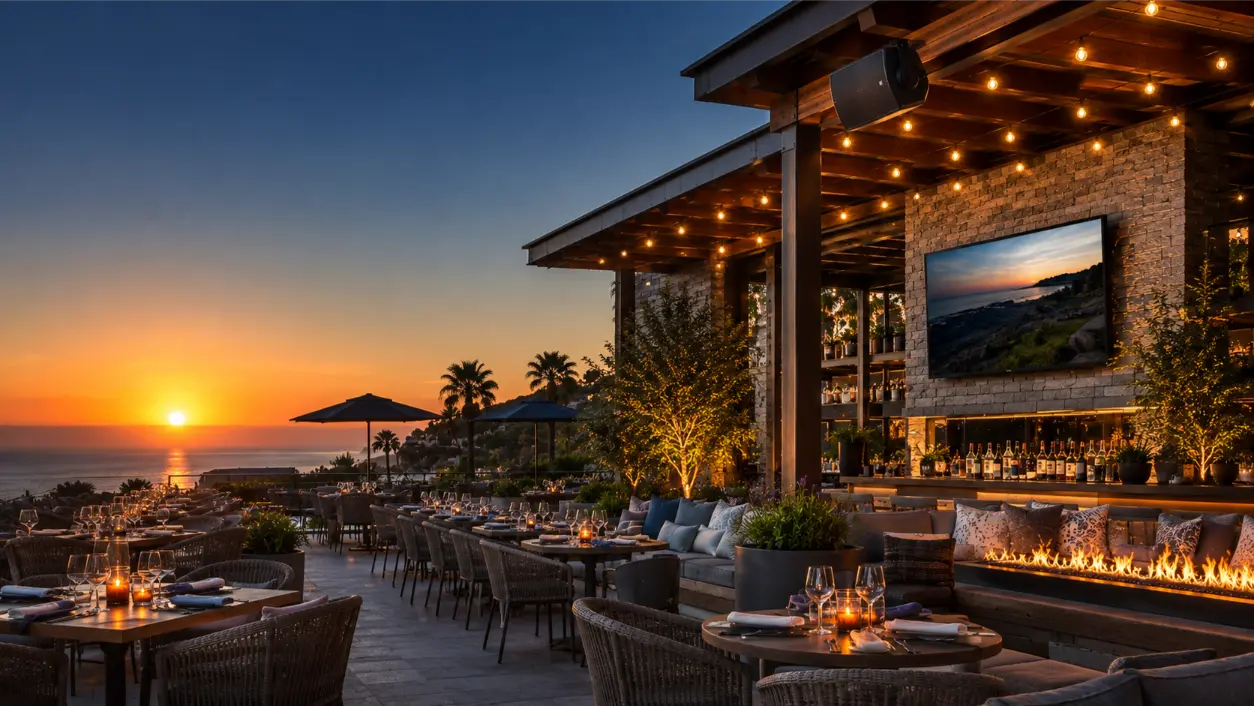
Outdoor Patios Need Their Own AV Plan
Outdoor dining and patio entertainment can extend the guest experience, but outdoor AV requires different planning than indoor systems. Speakers, displays, wiring, control devices, and mounts need to be selected and placed with weather, sunlight, noise, coverage, and durability in mind.
A patio may need background music during dining, stronger audio during events, or screens for sports viewing. The system should provide coverage without blasting nearby tables or neighboring spaces.
Outdoor AV should also connect cleanly to the indoor system. Staff should not have to manage a separate, confusing setup just because guests move outside.
Hospitality Media Rooms Can Support Events and Revenue Opportunities
A hospitality media room installation can make a venue more flexible. A private room, lounge, banquet space, or event area can support corporate presentations, sports watch parties, fundraising events, private celebrations, wine dinners, and community gatherings.
This type of space should include flexible input options, clear audio, a professional display, lighting control, and intuitive staff operation. It should also be designed to look finished when no event is happening.
While AV alone does not guarantee bookings or revenue, a better-equipped event space can make a venue easier to market and easier to use for a wider range of guest needs.
Keep Technology Aligned With the Brand
A luxury restaurant, neighborhood sports bar, boutique hotel lounge, and family entertainment venue should not all have the same AV design. The system should match the brand, architecture, interior design, and guest expectations.
Some venues need visible high-energy displays. Others need hidden speakers, discreet touch panels, and screens that disappear into the design. A premium hospitality experience often depends on technology that feels integrated rather than added on.
The best AV plan supports the brand without making the room feel overbuilt or visually cluttered.
Design for Maintenance and Future Changes
Hospitality environments are demanding. Equipment runs for long hours, staff members change, guests interact with the space, and business needs evolve. A system should be designed for service access, maintenance, labeling, documentation, and future upgrades.
Equipment racks need ventilation and organization. Cables should be labeled. Displays and speakers should be accessible when service is needed. Control systems should be documented so the venue is not dependent on guesswork.
Planning for serviceability protects the investment and reduces the risk of downtime during important business hours.
How AVI Group Supports Hospitality AV Installation
AVI Group is an Atlanta-area AV design and integration firm serving residential and commercial clients with custom home theaters, commercial AV solutions, conference room systems, audio distribution, smart lighting, automation, networking, security, outdoor entertainment, and integrated control.
For restaurants, bars, and hospitality spaces, AVI Group can help plan the system around the guest experience. That may include video walls, distributed audio, private dining room AV, patio entertainment, lighting scenes, networking, acoustic considerations, source control, staff-friendly operation, and serviceable equipment design.
Because every hospitality venue is different, AVI Group does not rely on one-size-fits-all pricing. A consultation helps define the space, goals, construction stage, operational needs, and best AV approach before equipment decisions are made.
Hospitality AV Planning Checklist
Use this checklist before upgrading or building a restaurant, bar, or hospitality AV system:
- Define the main guest experiences: sports, dining, private events, music, presentations, patio entertainment, or mixed use.
- Map key viewing areas before choosing screen sizes and display locations.
- Plan audio zones for the bar, dining room, patio, entry, private rooms, and event spaces.
- Decide which areas need independent source and volume control.
- Coordinate lighting scenes with dining, game day, private events, late-night ambience, and cleanup.
- Confirm network capacity for streaming, control, music, signage, security, and guest connectivity.
- Address acoustics so the room feels energetic without becoming uncomfortable.
- Plan private dining room AV for presentations, celebrations, and flexible events.
- Select outdoor AV equipment and placement for patio conditions.
- Keep technology aligned with the venue’s design and brand.
- Make control simple enough for staff to use during service.
- Plan service access, ventilation, labeling, documentation, and future upgrades.
- Bring the AV integrator into the project before construction or finish decisions limit options.
Restaurant AV installation is not just about screens and speakers. It is about creating a hospitality experience that supports how guests gather, watch, listen, celebrate, dine, and return.
For restaurants, bars, and hospitality spaces in the Atlanta area, early AV planning can make sports nights more immersive, private rooms more useful, patios more inviting, and daily operations easier for staff.
If your venue is planning a new entertainment experience, private room, video wall, patio system, or full hospitality AV upgrade, AVI Group can help design a system that feels intentional, reliable, and easy to use.
FAQ
What is hospitality AV installation?
Hospitality AV installation is the planning and installation of audio, video, lighting, control, networking, and related technology for restaurants, bars, hotels, private dining rooms, patios, and event spaces.
What AV features should a sports bar consider?
A sports bar should consider display placement, video walls, sightlines, audio zones, source control, staff-friendly operation, reliable networking, lighting scenes, and acoustic comfort.
Can a private dining room include presentation AV?
Yes. A private dining room can include a display or projector, speakers, wireless presentation options, microphones, lighting scenes, and simple controls for business events, celebrations, and private gatherings.
Why is audio zoning important in restaurants and bars?
Audio zoning lets different areas use different volume levels or sources. This helps a venue keep the bar energetic, the dining room comfortable, the patio balanced, and private rooms independent when needed.
How can AVI Group help restaurants and bars in Atlanta?
AVI Group can help Atlanta-area restaurants, bars, and hospitality venues plan and install commercial AV systems, video walls, distributed audio, private room AV, lighting control, networking, outdoor entertainment, and integrated staff-friendly controls.
RELATED LINK: