
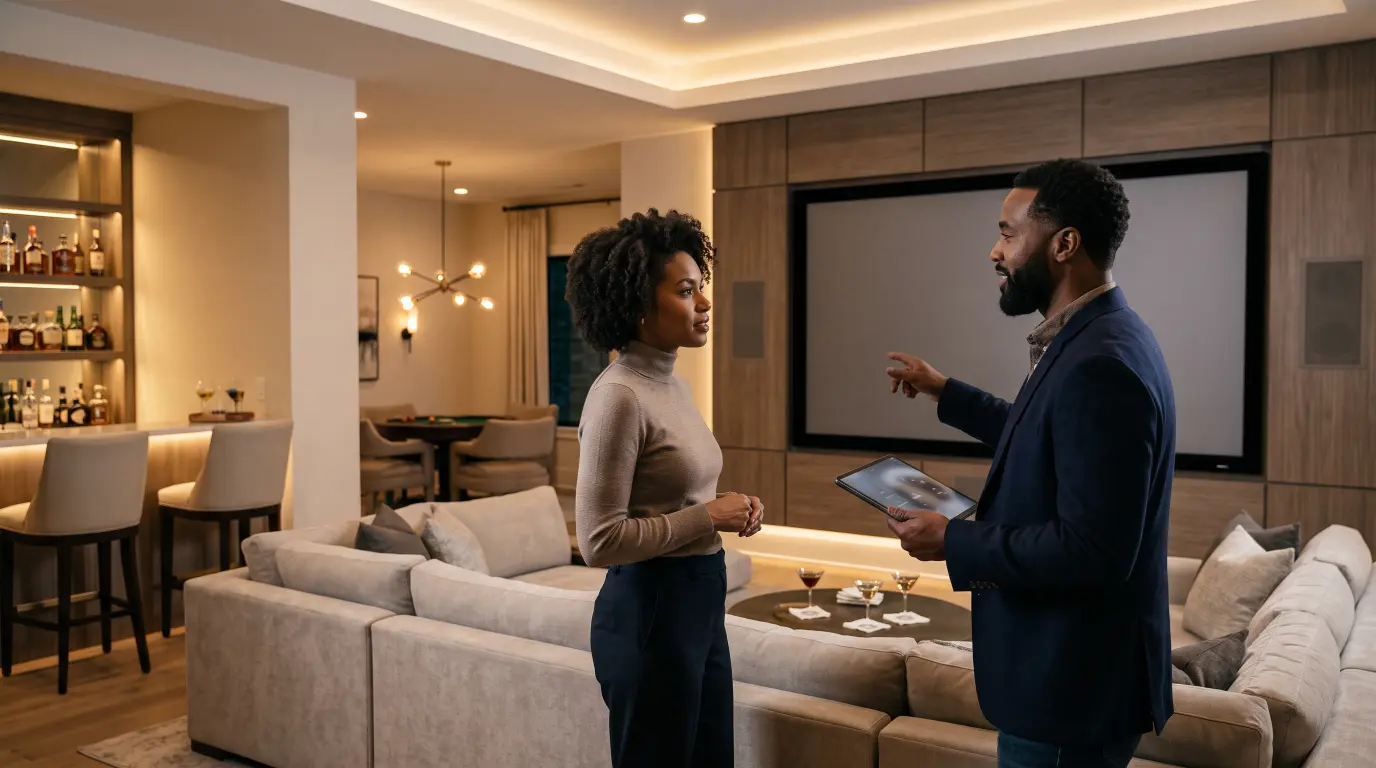
A home theater designed only for private movie nights can fall short when the room needs to host guests. A couple may be comfortable with one perfect viewing position, but a group needs better seating flow, clearer audio across the room, easier control, flexible lighting, and a layout that works before, during, and after the main event.
That is why home theater for entertaining is a different planning conversation. The room should still feel cinematic, but it also needs to support game days, watch parties, family gatherings, cocktails, kids movie nights, music, and casual conversation. A great entertainment room is not only about the screen. It is about how people move, gather, hear, see, and use the space together.
AVI Group designs and installs custom home theaters, whole-home audio, smart lighting, motorized shades, networking, automation, outdoor entertainment, and integrated AV systems for Atlanta-area homeowners. For luxury homeowners who entertain often, the best results come from planning the theater as part of a complete hosting experience, not as a standalone equipment package.
Start With the Hosting Experience
Before selecting a screen, speakers, or seating, define how the room will be used when guests are present. Will the space host sports nights, movie premieres, gaming, cocktail parties, family gatherings, or all of the above? Will guests sit through a full movie, move between a bar and seating area, or watch casually while talking?
A private theater can optimize for one main viewing position. A media room for hosting needs to work for a group. That means the design must consider multiple sightlines, comfortable conversation, traffic flow, easy access to food and drinks, lighting zones, and simple control that any host can use quickly.
The right design begins with lifestyle. Once the hosting goals are clear, the technical plan can support them without making the room feel complicated.
Choose Between a Dedicated Theater and a Social Media Room
A dedicated theater is ideal when the homeowner wants a focused cinema experience with controlled light, immersive surround sound, theater seating, acoustic treatments, and a clear front-of-room orientation. It can still be used for guests, but the room’s main purpose is watching.
A social media room is more flexible. It may include lounge seating, a bar, game area, multiple screens, whole-room audio, or an open connection to other entertainment spaces. It may not be as dark or acoustically isolated as a dedicated cinema, but it can be better for hosting.
Neither choice is automatically better. The right answer depends on how the homeowner entertains. Many luxury homes benefit from a hybrid approach: a cinematic room that also supports conversation, sports, music, and casual gatherings.
Plan Seating for Groups, Not Just One Perfect Seat
Seating is one of the biggest differences between private viewing and entertaining. A single row of seats may be ideal for a small family, but it may not work when guests arrive. The layout should account for how many people the room should host comfortably and how those guests will use the space.
Options may include theater recliners, sofas, sectionals, swivel chairs, bar-height seating behind the main row, or a mix of formal and casual seating. If the room will host sports or parties, guests may want places to sit, stand, snack, and talk without blocking the main view.
The seating plan should be coordinated with screen size, speaker placement, walkways, risers, lighting, and furniture depth. Moving seating later can disrupt the entire AV plan.
Protect Sightlines From Every Main Seat
In an entertainment room, not everyone will sit in the center. Guests may watch from side seats, bar stools, a game table, or a lounge area. The screen or display should be visible from the places where people will realistically gather.
Sightline planning should account for screen height, seating distance, furniture, columns, doorways, bar counters, and walkways. If the room includes multiple viewing zones, a second display may make more sense than forcing one screen to serve every angle.
Good sightline planning prevents the room from feeling great for two people and awkward for everyone else.
Think Beyond One Screen
For movie nights, one large screen may be perfect. For hosting, especially sports or events, multiple displays can make the space more flexible. A large main screen can anchor the room while secondary displays support a bar area, game table, or adjacent lounge.
Multiple displays should not be added randomly. They need source planning, control strategy, power, wiring, network reliability, and audio coordination. The host should be able to switch content without juggling remotes or confusing guests.
A luxury entertainment room AV setup should feel simple even when the system behind the scenes is sophisticated.
Design Audio for Conversation and Immersion
A theater for private viewing can focus heavily on immersive surround sound. A room for entertaining needs more nuance. Guests may want powerful audio during a movie or game, but they may also want comfortable background music before and after the main event.
Speaker placement should support the screen experience without making conversation difficult. In larger rooms, audio zones may be needed so the theater, bar, game area, and adjacent spaces can play together or separately.
Whole-home audio planning is especially useful for homeowners who host often. Music can move naturally from the theater to the kitchen, patio, basement lounge, or outdoor entertainment area.
Control Bass So It Feels Impressive, Not Overwhelming
Bass can make movies and sports feel exciting, but uneven bass can be a problem in group settings. One seat may shake while another feels thin. Guests near a wall or corner may experience too much low-end energy, while others miss the impact.
Subwoofer placement, room layout, calibration, and acoustic planning help create a more balanced experience. For larger entertainment rooms, multiple subwoofers or carefully planned wiring paths may be worth considering.
The goal is impact without discomfort. A room designed for guests should feel premium from every major seating area.
Use Lighting Scenes for Different Hosting Moments
Lighting is one of the most important parts of home theater design for parties. The room needs different moods for different moments: arrival, conversation, food and drinks, previews, movie mode, sports mode, game night, cleanup, and late-night safety.
Smart lighting scenes can make those transitions easy. A host should be able to dim the screen zone, keep the bar softly lit, highlight pathways, and bring the room back up after the event without adjusting each switch manually.
Lighting also affects the image. Screen-facing lights, reflections, and glare should be planned carefully, especially when the room includes a bar, open seating, or decorative fixtures.
Integrate Shades and Natural Light Control
If the entertainment room has windows, natural light control is essential. Daytime sports, afternoon gatherings, and early evening events can suffer if glare washes out the screen or makes the room uncomfortable.
Motorized shades can support both performance and design. They can be part of a one-tap scene that lowers shades, dims lights, turns on the display, and sets the audio for the event.
For homeowners who entertain, convenience matters. The room should move from bright and social to cinematic without becoming a project.
Make the System Easy for the Host to Use
A luxury entertainment room should not require technical patience. If the host needs several remotes, multiple apps, or a handwritten instruction sheet, the room can become stressful when guests are waiting.
Control should be simple and predictable. The system may include the display, projector, audio, sources, lighting, shades, climate, and music zones, but the user experience should feel like a few clear choices: Movie Night, Game Day, Music, Party, All Off.
AVI Group’s smart home automation experience is valuable here because entertaining often involves more than AV. The best rooms connect technology into one polished hosting experience.
Plan the Bar, Game Room, or Lounge With AV in Mind
Many entertainment spaces include a bar, pool table, card table, golf simulator, wine area, or lounge outside the main theater seating. These areas should be part of the AV plan from the beginning.
A bar may need a display, speakers, accent lighting, charging outlets, network access, and control. A game room may need music, TV visibility, and lighting that feels lively without competing with the theater. A lounge may need softer audio and easy source selection.
Planning these spaces together prevents the theater from feeling disconnected from the rest of the entertainment area.
Create Smooth Traffic Flow
When guests are present, people move. They enter, greet, sit, stand, get drinks, use the restroom, move toward the bar, and leave during intermission or halftime. The room should support that flow without blocking the screen or stepping over equipment.
Walkways, seating spacing, riser placement, doorway locations, and furniture choices all matter. If the room is too tightly packed, it may look impressive in photos but feel uncomfortable during real events.
A hosting-focused AV plan works with the interior design, not against it.
Keep Equipment Hidden but Serviceable
Luxury homeowners often want technology to disappear into the design. That is possible, but equipment still needs ventilation, wiring access, service access, power, and network connectivity.
Receivers, amplifiers, streaming devices, control processors, gaming systems, and network equipment should be placed where they can function reliably. Cabinets and racks should not trap heat or make future service difficult.
A clean room depends on hidden infrastructure. The trick is hiding equipment without making it inaccessible.
Build a Network That Can Handle Guests
Entertaining places extra demand on the home network. Guests connect phones, streaming devices run high-bandwidth content, control systems need reliability, and music or video may play in multiple zones at once.
A premium media room for hosting should include hardwired connections for key devices and well-planned wireless coverage for guests and control devices. Network planning should happen before walls and ceilings are finished where possible.
A beautiful room that buffers during the big game does not feel luxurious. Reliability is part of the experience.
Do Not Ignore Acoustics in a Social Room
A hosting room needs to sound good, but it also needs to feel comfortable for conversation. Hard surfaces, glass, tile, high ceilings, open stairwells, and large open spaces can create echo and harshness.
Acoustic planning may include speaker placement, soft furnishings, rugs, wall treatments, ceiling details, bass control, and material choices that fit the design. The goal is not to make the room look like a studio. The goal is to make the room comfortable and clear.
When acoustics are considered early, performance and aesthetics can support each other.
Design for Multiple Types of Events
The best entertainment rooms are flexible. A Saturday football party, a quiet movie night, a kids sleepover, a formal gathering, and a music-focused cocktail event all ask different things from the same space.
Flexibility can come from lighting scenes, audio zones, multiple displays, movable seating, easy source control, and integration with nearby rooms or outdoor spaces. The room should adapt without requiring a complicated setup each time.
That flexibility is what separates a true luxury entertainment room from a room with a large screen.
Coordinate With Designers, Builders, and Electricians Early
Home theater installation for entertaining guests touches many parts of a renovation. The AV plan affects framing, wiring, power, lighting, millwork, furniture, acoustics, ventilation, shades, and finishes.
If the AV integrator is brought in late, conflicts may already be built into the room. A speaker may land behind millwork. A display wall may lack blocking. A cabinet may not ventilate. A lighting fixture may reflect on the screen. A seating plan may block the best audio layout.
Early coordination helps preserve both the design vision and the entertainment experience.
How AVI Group Helps Design Home Theaters for Entertaining
AVI Group is an Atlanta-area luxury AV design and integration firm serving homeowners and businesses with custom home theaters, whole-home audio, smart home automation, lighting, motorized shades, networking, security, outdoor entertainment, golf simulator rooms, and commercial AV systems.
For homeowners who entertain frequently, AVI Group can help plan the room around real hosting needs: seating, sightlines, speakers, subwoofers, lighting scenes, shades, network reliability, control simplicity, music zones, adjacent entertainment areas, equipment placement, and long-term serviceability.
Because every home and hosting style is different, AVI Group does not use one-size-fits-all pricing or generic packages. A free consultation is the best starting point for designing a room that feels cinematic, social, reliable, and easy to use.
Home Theater for Entertaining Checklist
Use this checklist before finalizing the room design:
- Define how the room will be used: movies, sports, parties, gaming, music, or multipurpose hosting.
- Choose whether the space should be a dedicated theater, social media room, or hybrid entertainment room.
- Plan seating for group comfort, not only one perfect viewing position.
- Confirm sightlines from the main seats, bar, lounge, or game area.
- Decide whether one screen is enough or multiple displays are needed.
- Design speaker and subwoofer placement around the actual seating layout.
- Create lighting scenes for arrival, conversation, movie mode, game day, parties, and cleanup.
- Integrate motorized shades if natural light affects the screen.
- Make control simple with clear scenes and easy source selection.
- Coordinate AV needs for bars, game rooms, lounges, or outdoor areas.
- Plan traffic flow so guests can move without blocking the experience.
- Hide equipment while preserving ventilation and service access.
- Build a reliable network for streaming, control, and guest use.
- Consider acoustics so the room supports both immersion and conversation.
- Bring the AV integrator in early with the builder, designer, electrician, and cabinetmaker.
A home theater for entertaining should be more than a private screening room. It should be a complete hosting environment that works for groups, conversation, sports, movies, music, and everyday enjoyment.
The best results come from early planning. Seating, sightlines, speakers, displays, lighting, shades, networking, acoustics, and control all need to work together. When those decisions are coordinated before the room is finished, the final space feels intentional instead of improvised.
If you are planning a luxury entertainment room in the Atlanta area, AVI Group can help design and install a custom AV system that supports the way you host.
FAQ
What makes a home theater good for entertaining guests?
A home theater for entertaining should include comfortable group seating, clear sightlines, balanced audio, flexible lighting, simple controls, reliable networking, and easy access to nearby gathering areas such as a bar, lounge, or game room.
Is a media room better than a dedicated theater for hosting?
It depends on how the space will be used. A dedicated theater is best for focused movie watching, while a media room may be better for sports, parties, casual viewing, and mixed-use entertaining. Many luxury homes use a hybrid approach.
Should an entertainment room have more than one screen?
Multiple screens can be useful for sports, parties, bars, and game rooms, but they should be planned carefully with proper wiring, source control, audio routing, and display placement.
Why is lighting important in home theater design for parties?
Lighting affects mood, comfort, screen visibility, and safety. Smart lighting scenes can support arrival, conversation, movie mode, game day, parties, and cleanup without requiring manual adjustment of every switch.
How can AVI Group help with a luxury entertainment room AV setup?
AVI Group can help plan and install custom theater systems, whole-home audio, lighting control, motorized shades, networking, automation, and integrated AV zones that support both private viewing and group entertaining.
RELATED LINK: