
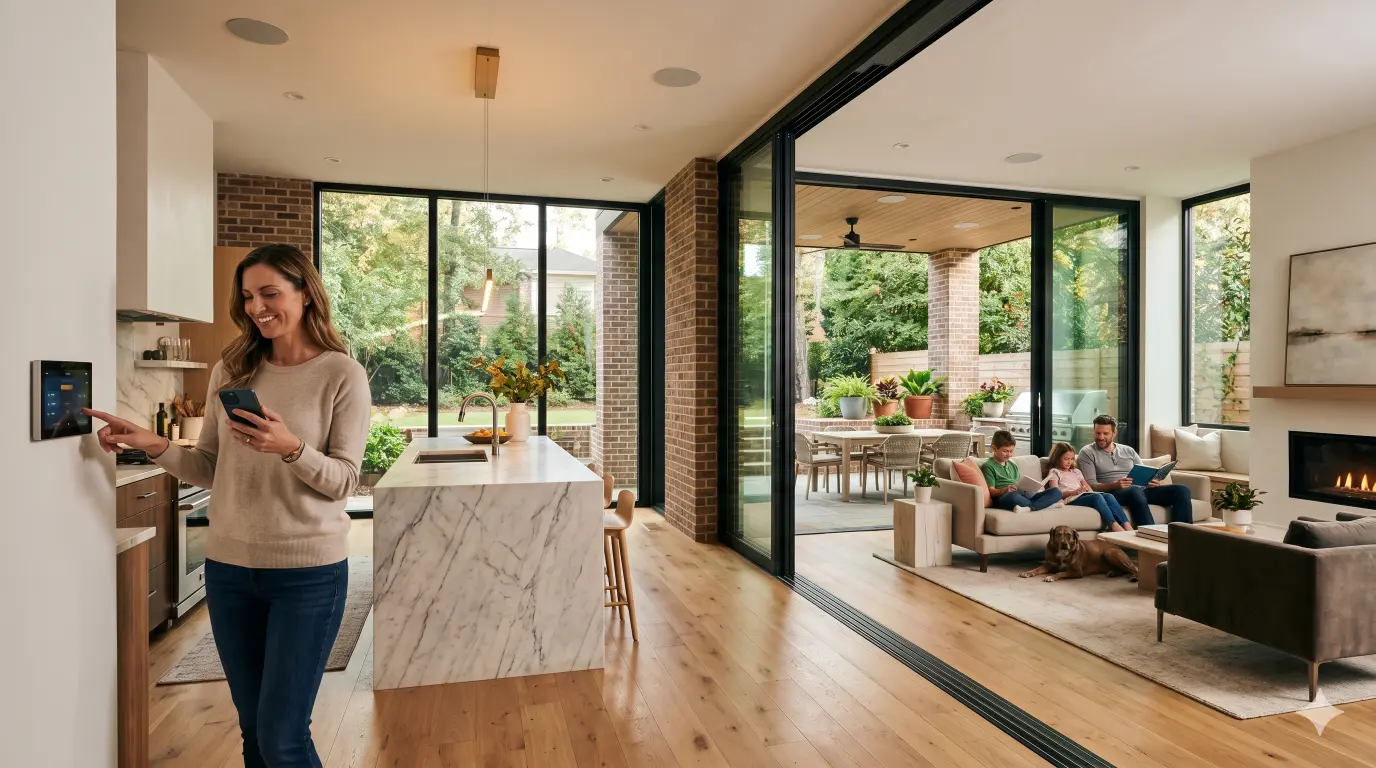
If you are using portable Bluetooth speakers around the house, you already understand the appeal of easy music. You can move a speaker from the kitchen to the patio, connect from your phone, and play a playlist in seconds. But once you want music to feel seamless across several rooms, Bluetooth can start to feel limited.
That is where whole-home audio comes in. Whole-home audio is not just a bigger speaker. It is a planned sound system designed to distribute music, TV sound, or other audio sources across multiple rooms or outdoor areas with better coverage, cleaner control, and less frustration.
For homeowners comparing options, whole home audio explained simply means this: instead of carrying one speaker from room to room, your home has an integrated audio system with zones, speakers, controls, sources, and infrastructure designed around how you actually live. The result can feel simple from the user side, even when the system behind the walls is more sophisticated.
This guide explains the difference between whole-house audio and Bluetooth speakers, how multiroom audio works, what zones mean, when wiring matters, whether you need an amplifier, and why a professionally designed system can be a better fit for open floor plans, outdoor living spaces, and homes where audio needs to feel effortless.
What Is Whole-Home Audio?
Whole-home audio is a system that lets you play audio in multiple rooms or zones of the home. Those zones might include the kitchen, living room, dining room, primary suite, home office, basement, patio, pool area, or dedicated theater space.
The key word is system. A whole-home audio setup usually includes speakers, amplifiers, network connections, control interfaces, music sources, and sometimes integration with smart home platforms. The system can be designed so each area plays the same music, different music, or no music at all.
For example, you might play one playlist throughout the main level during a party, stream quiet music in the kitchen while someone else listens to a podcast in the office, and keep the patio on a separate volume level. In a well-designed system, this does not require pairing and unpairing devices all day. You choose the room, source, and volume from a phone, wall keypad, touchscreen, remote, or smart home control interface.
A basic Bluetooth speaker is a single device. Whole-home audio is a coordinated environment.
How Bluetooth Speakers Are Different
Bluetooth is built for short-range wireless connections between devices. Your phone, tablet, or laptop pairs with a nearby speaker, and that speaker plays the audio. This is convenient for casual listening, travel, small rooms, and quick setup.
The tradeoff is that Bluetooth is usually personal and device-centered. The speaker depends on the paired device. If you walk away with your phone, the connection may weaken or drop. If someone else wants to play music, they may need to disconnect you and pair their device. If you want the same music in several rooms, you may run into sync problems, volume mismatches, or device limitations.
Bluetooth can be a great tool. It is not always the best foundation for whole-house listening. It was not originally designed to be a permanently installed, expandable, multi-zone home audio infrastructure.
This is the biggest difference: Bluetooth answers, “How do I play audio from my phone to this speaker right now?” Whole-home audio answers, “How should music and sound work across this house every day?”
Whole House Audio vs Bluetooth Speakers
The practical differences show up in daily use. With Bluetooth speakers, every listening session may start with pairing, charging, moving the speaker, checking battery life, or making sure the phone stays nearby. With whole-home audio, the speakers are already where you need them, the system is connected, and control is designed for the household.
Bluetooth works well when you want flexibility at a small scale. Whole-home audio works better when you want consistency across rooms.
A portable speaker can cover a bedroom or small patio. It may struggle in an open floor plan where sound needs to be even across a kitchen, family room, and dining area. If you turn it up enough to hear across the space, it may be too loud near the speaker and still weak farther away. A whole-home audio design can use multiple speakers placed strategically so the sound feels balanced at a lower, more comfortable volume.
Bluetooth is also less ideal when the home has multiple listeners. If one person controls the speaker from their phone, everyone else depends on that device. A whole-home system can give the family shared control without tying the experience to one person’s phone.
What Are Audio Zones?
Zones are one of the main ideas behind whole-home audio. A zone is an area that can be controlled independently. A kitchen may be one zone. A patio may be another. A primary bedroom may be another.
Each zone can have its own volume, source, and on/off control. Some zones may be grouped together. For example, during a dinner party, you might group the kitchen, dining room, and patio so they play the same music. Later, you might ungroup them so the patio turns off while the living room stays on.
Zones make audio feel natural because not every part of the house needs the same sound at the same time. Without zones, homeowners often end up with either too much music in quiet areas or not enough coverage where people are gathering.
Good zone planning starts with lifestyle questions. Where do you entertain? Where do you relax? Where do you watch TV? Where do you want background music? Where do you need outdoor sound? The answers determine the system design.
How Does Multiroom Audio Work?
Multiroom audio works by connecting audio sources to speakers in different rooms through a control system. Depending on the design, the audio may travel through speaker wire, network connections, wireless streaming technology, or a mix of methods.
In many professionally designed systems, in-ceiling, in-wall, bookshelf, outdoor, or architectural speakers are connected to amplifiers. Those amplifiers may be centralized in an equipment rack or distributed closer to the rooms they serve. The system is then controlled through an app, keypad, touchscreen, remote, or integrated smart home interface.
The user experience can be simple: select the room, choose music, set the volume, and play. Behind the scenes, the system is managing routing, amplification, source selection, and synchronization.
This is why the network matters. Modern audio systems often depend on strong home networking, especially when streaming services, app control, and wireless components are involved. A weak network can cause dropouts, lag, or inconsistent performance. For a high-end home audio system, networking should not be an afterthought.
Wired vs Wireless Whole-Home Audio
Whole-home audio can be wired, wireless, or hybrid. Each approach has a place.
A wired system uses speaker wire, network cabling, and centralized equipment to create a stable foundation. It is often a strong option for new construction, major remodels, or homeowners who want clean architectural speakers and reliable performance. Wired systems can reduce reliance on wireless signals and keep equipment hidden.
A wireless system may use connected speakers, streaming devices, and wireless networking. This can be useful when running cable is difficult or when a homeowner wants to add rooms gradually. Wireless does not always mean simple, though. The system still needs strong networking, correct placement, and the right products.
A hybrid system combines both. For example, main living areas and outdoor zones may use wired architectural speakers, while a guest room or office uses a wireless speaker. Many homes benefit from a hybrid design because it balances performance, budget, aesthetics, and existing construction.
The best answer depends on the house, the goals, and how permanent the system needs to be.
Do You Need an Amplifier for Whole-Home Audio?
In many whole-home audio systems, yes, you need amplification. Speakers need power, and the amplifier provides that power. The amplifier may be a separate component in a rack, a multi-zone amplifier, a receiver, or an amp built into an active speaker.
Portable Bluetooth speakers have built-in amplification because the speaker, battery, and electronics are packaged together. Architectural speakers in ceilings or walls usually need an external amplifier. Outdoor speakers often need amplification too, especially if they need to cover a patio, pool, or yard area.
Amplifier planning affects sound quality, volume, reliability, and expandability. Too little power can make a system feel weak or strained. The wrong amplifier setup can also limit how many zones you can add later.
This is one reason professional design matters. A home audio system should not be built only around speaker count. It should account for room size, speaker type, listening level, wiring distance, source needs, future expansion, and control preferences.
Why Open Floor Plans Need Better Audio Planning
Open floor plans are one of the most common reasons homeowners outgrow portable speakers. A kitchen, breakfast area, and family room may look like one large space, but the way sound behaves in that space can be tricky.
If one speaker sits on a counter, the sound may be loud in one corner and thin elsewhere. Hard surfaces, high ceilings, windows, and open sightlines can make the audio uneven. Turning the speaker up may make the problem worse because the closest listeners get too much volume while distant areas still lack clarity.
A whole-home audio design can place multiple speakers across the open area so coverage is more even. Instead of blasting from one point, the system spreads sound through the space. This can create better background music at lower volume and a more comfortable listening experience for guests.
For homes where the kitchen and living area are the center of daily life, this difference can be dramatic.
Outdoor Audio Is Another Reason Bluetooth Falls Short
Outdoor spaces are hard on audio. There are no walls to contain the sound, ambient noise is higher, and coverage needs can be larger. A small Bluetooth speaker may work on a table, but it often cannot cover a patio, pool, outdoor kitchen, or yard evenly.
Outdoor whole-home audio can use weather-resistant speakers, landscape speakers, buried subwoofers, dedicated outdoor zones, and proper amplification. The goal is to create pleasant coverage without blasting one speaker at uncomfortable levels.
Outdoor zones also benefit from easy control. You should be able to adjust patio volume, turn the pool area on or off, or group outdoor sound with indoor entertaining spaces without carrying a speaker outside or worrying about battery life.
Whole-Home Audio Lag Issues and Sync
Lag and sync problems can ruin a multiroom experience. If the kitchen plays slightly behind the living room, the same song can sound like an echo. If TV audio is delayed from the picture, dialogue feels unnatural.
Bluetooth systems can create sync challenges when multiple speakers or devices are involved. Whole-home audio systems are designed to manage synchronization more intentionally, especially when zones are grouped together. The specific result depends on the products, network, wiring, and system design.
This is important for entertaining areas, open floor plans, and rooms where sound from two zones overlaps. Proper planning helps avoid the “two speakers playing almost together but not quite” problem.
Expandability: Planning Beyond the First Room
One of the advantages of whole-home audio is expandability. You may start with the kitchen, living room, and patio, then add a bedroom, home office, basement, or outdoor zone later.
But expandability works best when it is planned early. Equipment location, wiring pathways, network strength, amplifier capacity, and control platform all affect future options. A system that is designed only for today’s needs may become harder to expand tomorrow.
This is especially important for homeowners building or remodeling. Prewiring during construction can make future audio zones easier, cleaner, and more cost-effective than trying to retrofit after walls and ceilings are finished.
Even if you do not install every speaker right away, planning the infrastructure can protect future flexibility.
When Bluetooth Is Enough
Bluetooth is not bad. It may be the right choice if you only need music in one room, want something portable, have a small budget, rent your home, or do not care about synchronized multiroom playback.
A Bluetooth speaker is also useful as a personal device. It works well for casual listening, small gatherings, travel, garages, or temporary setups. If you are happy moving one speaker around and reconnecting devices, there may be no need for a larger system.
The upgrade conversation usually starts when the pain points become repetitive: weak coverage, charging batteries, messy countertops, inconsistent pairing, one person controlling the music, too much volume in one spot, or no clean way to include outdoor areas.
When those frustrations become normal, whole-home audio may be worth exploring.
What a Professional Integrator Adds
A professional AV integrator does more than sell speakers. The right team designs the system around the home, the architecture, the people using it, and the long-term plan.
That includes speaker placement, wiring strategy, amplifier selection, network readiness, source planning, control interface, aesthetics, and future expansion. It also includes making the system simple enough that the homeowner actually enjoys using it.
AVI Group serves homeowners across the Atlanta metro area with custom AV, whole-home audio, home theater, smart home automation, lighting, networking, outdoor entertainment, and related technology integration. The company’s approach is built around tailored design, performance, aesthetics, and ease of use.
For a homeowner comparing Bluetooth speakers with a true whole-home system, a consultation can clarify what is possible. You may not need audio in every room. You may need the right zones, the right speakers, and the right control plan.
Questions to Ask Before Planning Whole-Home Audio
Before choosing products, answer these questions:
- Which rooms or outdoor areas need audio?
- Do you want the same music everywhere or different audio by zone?
- Will the system connect to TVs, streaming services, turntables, or other sources?
- Do you prefer hidden architectural speakers or visible statement speakers?
- Is the home under construction, being remodeled, or already finished?
- How important is outdoor coverage?
- Do you want integration with lighting, shades, security, or smart home controls?
- Do you want to expand the system later?
These answers help shape the design and prevent overbuying or underplanning.
Whole-home audio is different from Bluetooth because it is designed as a home system, not just a portable speaker connection. Bluetooth is convenient for simple listening, but whole-home audio provides better coverage, zones, synchronization, expandability, and integrated control.
If your current portable speakers feel limited, the next step is not necessarily buying more of them. The better step may be designing audio around your home: where people gather, how rooms connect, where sound overlaps, and how you want control to feel.
AVI Group can help Atlanta-area homeowners explore a custom whole-home audio system that blends performance, design, and ease of use. Book a free consultation to discuss your space, your listening habits, and the best path beyond portable speakers.
FAQ
What does whole-home audio mean?
Whole-home audio means a planned audio system that distributes music or sound across multiple rooms or zones in a home. It may include in-ceiling speakers, in-wall speakers, outdoor speakers, amplifiers, networked sources, and app or smart home control.
Is whole-home audio better than Bluetooth speakers?
Whole-home audio is usually better for homeowners who want consistent sound across several rooms, outdoor areas, or open floor plans. Bluetooth speakers are convenient for portable, single-room listening, but they can be limited for coverage, sync, control, and expandability.
How does multiroom audio work?
Multiroom audio connects sources, amplifiers, speakers, and controls so different areas of the home can play audio independently or together. A homeowner can often choose the zone, source, and volume from an app, keypad, touchscreen, or smart home interface.
Do I need an amplifier for whole-home audio?
Many whole-home audio systems use amplifiers to power architectural or outdoor speakers. Some wireless speakers have amplification built in, but in-ceiling, in-wall, and many outdoor speakers typically need external amplification.
Can whole-home audio be added to an existing home?
Yes. Whole-home audio can often be added to an existing home using a wired, wireless, or hybrid design. The best approach depends on the home’s construction, desired zones, speaker locations, network quality, and future expansion goals.
RELATED LINK: