
A package theft can make the next step feel simple: buy a camera and point it at the porch. Sometimes that is exactly what helps. Other times, the new camera shows motion, shadows, or the top of someone’s head but not the detail you actually needed.
Good security camera placement home planning starts before the device goes on the wall.
It starts with the way someone approaches the house, where packages are dropped, what the lighting looks like after dark, and what the camera should not see. The goal is not to cover every inch of the property with video. The goal is to place cameras where they can provide useful awareness while respecting privacy and fitting into the way the home looks and functions.
For homeowners in the Atlanta area, this is especially important in larger homes, homes with long driveways, gated side yards, detached garages, covered porches, outdoor living areas, and smart home systems that already include lighting, Wi-Fi, locks, shades, or automation. A camera is one piece of the system. Placement determines whether that piece helps or frustrates you.
Start With the Incident, Not the Camera
After a package theft, it is natural to focus on the spot where the box disappeared. That location matters, but it is only part of the story. A better first question is: how did the person get there?
Walk through the likely path. Did they come from the sidewalk, the driveway, the street, a side gate, or a walkway near the garage? Did they pause at the front steps? Could they have stayed outside the range of a doorbell camera? Did the porch light help, or did it create glare? Was the package placed directly below the camera, where the lens could not see it clearly?
This walkthrough keeps you from solving the wrong problem. A camera aimed only at the front door may miss someone approaching from the driveway. A camera aimed too broadly may show the whole yard but not enough detail at the porch. A camera mounted too high may feel secure because it is hard to reach, but the angle may make faces and package activity difficult to see.
One well-placed camera can be more useful than several cameras placed as an afterthought. Before buying more devices, define what each camera needs to capture: a person approaching, a vehicle entering the driveway, a gate opening, a package being delivered, or activity near a garage or patio door.
The Best Places to Put Security Cameras Outside the House
The best places to put security cameras outside house layouts usually have one thing in common: they are tied to movement. Cameras work best when they monitor the natural paths people use to approach, enter, or move around the property.
Front porch and front door
The front porch is often the first priority because it is where visitors, deliveries, and many package theft concerns occur. A doorbell camera can be helpful here, but it should not be treated as automatic full coverage. A covered porch, wide entry, columns, planters, decorative lighting, or a recessed doorway can create blind spots.
Think about the package drop zone. If delivery drivers usually place boxes to the side of the door, a camera looking straight outward may miss what happens near the wall. If packages are left below the doorbell, the camera may show the approach but not the package itself. In some homes, a second small camera or a better-positioned camera near the porch ceiling can provide a more useful angle.
Lighting matters here too. A bright porch fixture directly beside a lens can create glare. A backlit subject may appear as a silhouette at night. The best placement considers both the daytime view and the nighttime view.
Driveway and garage approach
Camera placement to cover driveway and porch areas should account for the way people and vehicles enter the property. A driveway camera can help monitor cars, garage doors, delivery vehicles, and movement toward the front entry. It can also catch activity that happens before someone reaches the porch.
The camera should be aimed at your own driveway and approach path, not broadly across the street or deeply into neighboring property. If the driveway is long, curved, or partially blocked by landscaping, a single camera may not show enough. In those cases, the better solution may involve a camera near the garage, one near the front approach, or a design that pairs cameras with driveway lighting.
Garage doors deserve attention because they are often connected to tools, vehicles, storage, and interior access. A camera that captures the garage approach and the side door can sometimes be more useful than a camera pointed only at the center of the driveway.
Back doors, patios, and basement entries
Front doors get attention because they are visible. Back doors, patios, basement doors, and secondary entries are easier to forget. They may also be less visible from the street or from neighboring homes, which can make them important in a security plan.
For these areas, avoid the temptation to place a camera wherever it is easiest to mount. Start with the approach path. Can someone come from the backyard, deck stairs, side yard, or lower-level entrance? Does outdoor furniture, a grill, a column, or landscaping block the view? Does the camera need to see the door itself, the walkway, or both?
If the patio is used for entertaining, also think about everyday comfort. Homeowners often want security without making outdoor living spaces feel like they are constantly under surveillance. Professional placement can help balance coverage with aesthetics.
Side gates and backyard gates
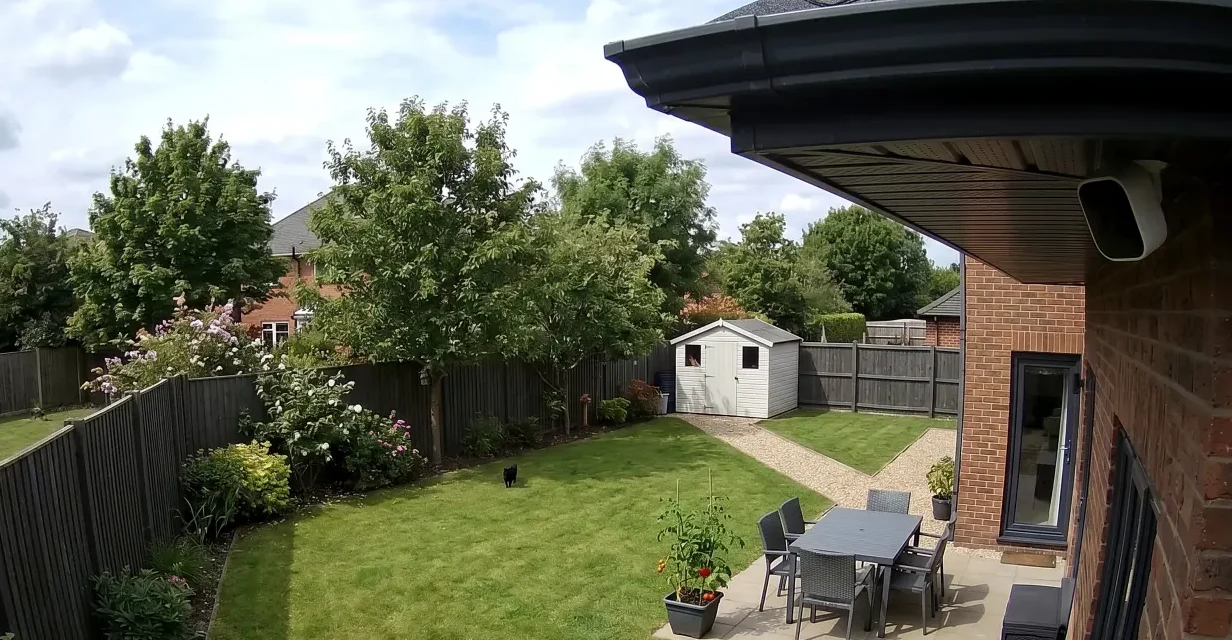
Camera placement for backyard gates is often overlooked until there is a reason to care. Side gates, fence doors, and rear yard access points can be important because they mark where someone enters a more private part of the property.
The camera should capture the gate and the approach to the gate if possible. A camera pointed only at the latch may miss where the person came from. A camera pointed too wide may show movement but not useful detail. If the gate is near a neighbor’s property, aiming and privacy settings matter even more.
Lighting can be a challenge at gates. A camera with night capability may still struggle if the area is completely dark, if a fixture shines directly into the lens, or if landscaping creates moving shadows. A planned combination of lighting and camera coverage is often better than relying on the camera alone.
How Camera Placement Backfires
A camera can be technically working and still fail at its job. Most placement problems happen because the camera was installed based on convenience instead of purpose.
The camera is too high, too low, or too wide
Homeowners often ask how high to mount outdoor camera equipment. The honest answer is that height depends on the camera, the area, the mounting surface, and the detail you need. A camera mounted higher may be harder to tamper with and can cover a larger area. But if it is too high or angled too steeply, it may capture the tops of heads rather than useful facial detail.
A camera mounted too low may show better detail but be easier to block, bump, or tamper with. A camera with an extremely wide view can make the image feel comprehensive, but the important subject may appear too small in the frame.
The right height is the point where the camera can see the approach, capture useful detail, and remain practical for the location. That may differ between a porch, a gate, a garage, and a patio.
Lighting washes out the subject
Lighting can make or break a camera view. A bright fixture near the lens can cause glare. A camera aimed toward headlights may struggle when cars pull into the driveway. A camera placed behind or near reflective glass may show reflections instead of the scene outside. Sun angle can also matter during certain times of day.
Nighttime performance deserves its own check. Do not rely only on what the camera shows at noon. Review the view after dark, when porch lights, landscape lights, motion lights, and car headlights are active. If the camera is part of a smart home system, lighting scenes may be used to support better visibility without making the home look harsh or overlit.
The camera sees motion but not identity
Motion alerts can create a false sense of coverage. A camera may notify you that someone crossed the driveway, but if the person is too far away, backlit, or partly blocked, the footage may not be useful. This is common when a camera is asked to cover too much area.
Think in terms of zones. One camera may be responsible for the porch. Another may be responsible for the driveway. Another may be responsible for a side gate. When each camera has a clear job, you are less likely to end up with footage that shows something happened but not enough about what happened.
The camera creates neighbor privacy concerns
A security camera should protect your home without making neighbors feel watched. The safest approach is to aim cameras toward your own property: your doors, driveway, porch, walkway, gate, garage, or yard. Avoid security camera pointing at neighbors’ windows, private outdoor spaces, or areas unrelated to your security needs.
Many smart cameras offer privacy zones or masking features that block part of the image. Those settings can be useful when the best angle for your driveway also includes a sliver of a neighboring property. Still, privacy should be considered before installation, not treated as an afterthought.
Audio is another consideration. Cameras and doorbells that record sound can raise different privacy expectations than video-only devices. If there is any uncertainty about local rules or a sensitive neighbor situation, homeowners should seek appropriate guidance rather than guessing.
A Practical Placement Walkthrough After a Package Theft
The clearest way to plan camera placement is to walk the property with a specific event in mind. A package theft is a useful example because it involves a path, a target area, and a short window of activity.
Step one is to map the likely approach. Stand where a person would enter the property and walk toward the porch. Do this from the sidewalk, driveway, and any side path that could realistically be used. Notice where a person disappears behind columns, shrubs, parked cars, or porch walls.
Step two is to decide what the camera must capture. For a package theft, you may want to see the approach to the porch, the package drop zone, and the moment someone picks up or moves the package. That may not be possible from one angle. If not, decide which view is most important.
Step three is to check daytime and nighttime views. A camera that looks excellent during the day may struggle at night. Test porch lights, motion lights, landscape lights, and vehicle headlights. Look for glare, shadows, and backlighting.
Step four is to review privacy boundaries. Make sure the camera is focused on your property and practical security zones. If the view includes neighboring property, adjust the angle or use privacy zones where available.
Step five is to decide whether you need one camera, a different camera type, or a broader system. A doorbell camera may be right for a simple front entry. A floodlight camera may be better for a dark driveway or side yard. A more integrated system may make sense if cameras need to work with lighting, Wi-Fi, gates, smart locks, or whole-home control.
When a Smart Home Security Plan Is Better Than One More Camera
Sometimes the issue is not the absence of a camera. It is the absence of a plan.
A homeowner may add a doorbell camera after a package theft, then a driveway camera after a car concern, then a backyard camera after noticing the gate was left open. Each device may work on its own, but the overall experience can become fragmented. Different apps, weak Wi-Fi, inconsistent alerts, poor lighting, and mismatched aesthetics can make the system harder to use.
A planned smart home security design looks at the property as a whole. Cameras, lighting, network coverage, door locks, access control, and mobile control can be considered together. For example, a driveway camera may need stronger Wi-Fi coverage near the garage. A gate camera may work better with landscape lighting. A porch camera may need privacy zones and a better package view. A homeowner may want one-tap control rather than separate apps for every device.
This is where a professional design process can help. AVI Group works with homeowners to design technology systems that fit the home, the lifestyle, and the desired level of control. For security camera placement, that means thinking beyond the device itself and planning for coverage, usability, aesthetics, and integration.
If you want cameras, lighting, Wi-Fi, and smart home controls planned as one system instead of a patchwork of devices, AVI Group can help design a smart home security setup around your property, habits, and aesthetic preferences. Schedule a free consultation.
FAQs
What are the best places to put security cameras outside a house?
The best places are usually the main approach and entry points: the front porch, front door, driveway, garage approach, back doors, patios, side gates, and backyard gates. The right mix depends on how people move around your property and what you need each camera to capture.
How high should I mount an outdoor security camera?
Outdoor camera height depends on the camera, mounting surface, and viewing goal. It should be high enough to be practical and hard to casually disturb, but not so high that it only captures the tops of heads. Test the angle before final installation.
How do I place a camera to cover my driveway and porch?
Start by mapping the path from the driveway to the porch. Decide whether one camera can capture both areas with useful detail. If the driveway and porch are too far apart or blocked by walls, columns, vehicles, or landscaping, separate camera angles may work better.
How can I avoid security camera pointing at neighbors?
Aim cameras at your own doors, driveway, walkways, gates, and yard. Avoid pointing directly into neighboring windows or private outdoor areas. If part of a neighboring property appears in the frame, adjust the camera angle or use privacy zone settings when available.
Where should cameras go for backyard gates?
A backyard gate camera should usually capture both the gate and the approach to it. Check for fence angles, landscaping, darkness, and neighboring property lines. Lighting and privacy settings are especially important around side yards and gates.
Do I need more cameras or better placement?
Often, better placement comes first. If a camera is aimed poorly, adding more devices may not solve the problem. Define the job of each camera, test the view in real conditions, and then decide whether additional cameras are truly needed.
Ask AVI Group to review your driveway, porch, gate, and entry-point coverage before installing new cameras. A thoughtful plan can help your smart home security system feel easier to use, better integrated, and more aligned with the way your home actually works.
RELATED LINK:
Federal Trade Commission – How To Secure Your Home Security Cameras