
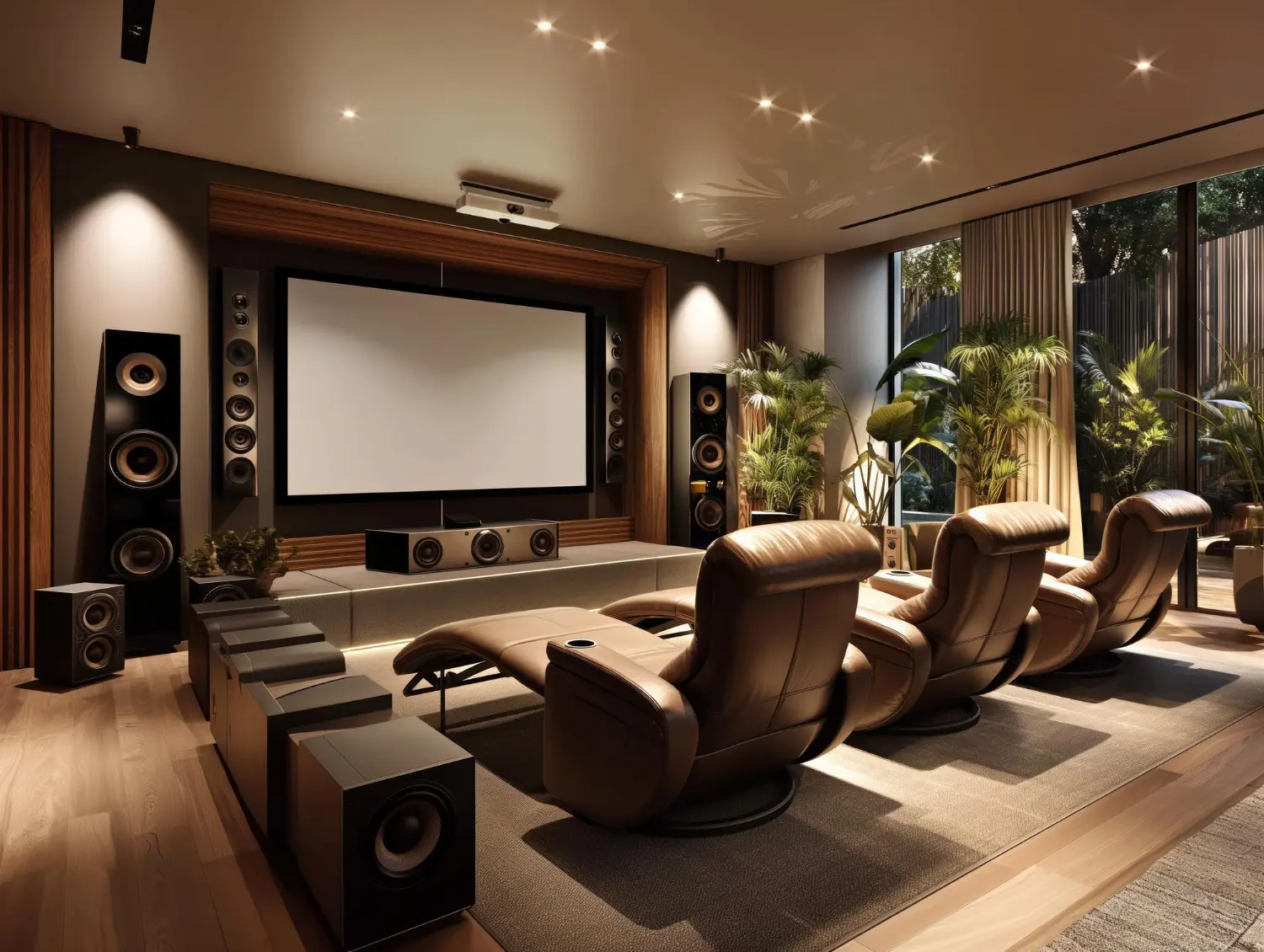
If you’re planning a remodel or looking at that unfinished basement and thinking “this could be something,” you’ve probably already typed media room vs home theater into a search bar.
Most people start with the wrong question: “Should we get a projector or a big TV?”
The real choice is bigger and more strategic: Do you want a flexible everyday space that happens to be great for movies—or a true, lights-down, immersive cinema experience?
Both paths can be fantastic investments when they’re matched to your family, your floorplan, and your budget. This guide walks you through a clear decision framework so you can stop guessing, avoid expensive re-dos, and plan a room you’re proud to show off for the next decade.
The Real Question Behind “Media Room vs Home Theater”
How Most Homeowners Frame the Decision (and Why It’s Too Shallow)
Most project conversations start with something like:
- “We want a big screen for the game.”
- “We’ve always dreamed of a basement theater with a projector.”
- “Should we get a soundbar or real speakers?”
That gear-first lens is understandable, but it misses the bigger picture. Rooms drive experience more than hardware does. The way your family lives, entertains, and uses the space will do more to determine whether the project is a success than whether you pick Brand A or Brand B.
If you only compare media room vs home theater on “how cinematic it feels” or “how big the screen is,” you risk creating a room that looks impressive on day one and slowly becomes the least-used space in the house.
The Three Forces Actually Driving the Choice: Lifestyle, Space, and Budget
Underneath all the product questions, three forces really decide which option is smarter:
- Lifestyle
- Do you mostly watch together as a family, with lights half-on and snacks on the coffee table?
- Do you host game days, parties, or casual hangouts where the TV is part of the background?
- Or are you the person who will sit alone or with one other person, lights fully down, watching films start to finish?
- Space
- Do you have a fully enclosed room (often in a basement) that can be darkened and isolated?
- Is the room open to a kitchen, bar, or hallway where people will walk through and talk?
- Will this space also need to double as guest room, playroom, or office?
- Budget
- How much are you planning to spend on the room as a whole, not just the electronics?
- Are you able to do some construction or is the envelope already fixed?
- Would you rather go “all out” on one pure cinema, or spread investment across multiple family spaces?
Seen this way, you’re not just buying equipment—you’re deciding what kind of room your home needs.
A Quick Self-Assessment: How Do You Really Watch and Listen Today?
Before you get attached to any labels, take a quick, honest inventory:
- How many hours a week do you watch movies or series together?
- How often do you watch sports or listen to music with guests?
- Do you like to pause movies to talk, grab drinks, or check your phone?
- Is having the room look good with the lights on just as important as how it feels with lights off?
If your mental picture leans more toward multi-use family hangout, you’re probably in media room territory.
If you instantly imagine dark walls, quiet, and everyone facing forward, a dedicated home theater might be the better fit.
What Each Room Type Is Actually Designed to Do
Defining a Media Room: Flexible, Social, Multi-Purpose
A media room is designed to disappear into everyday life:
- It might be a finished basement, bonus room, or large family room.
- People sit on sectionals, recliners, maybe at a bar or game table.
- Lighting is more flexible—lamps, sconces, accent lighting, maybe some blackout shades but not a total blackout.
The goal: make it easy to say “let’s throw something on” without any ceremony. It handles movies, sports, streaming, gaming, and casual music in a space that still feels like a normal room.
Done well, a media room feels:
- Comfortable with the lights half-on
- Kid- and guest-friendly
- Attractive enough to be part of the main living areas
Defining a Dedicated Theater: Controlled, Immersive, Purpose-Built
A dedicated theater is a purpose-built cinema:
- Fully enclosed, with minimal light leakage
- Walls, ceiling, and finishes chosen to control reflections and acoustics
- Seating laid out in rows or tiers, all facing the screen
- Lighting layers that dim smoothly to true “movie mode”
The goal: replicate the cinematic experience at home, with immersion and consistency taking priority over flexibility. It’s where serious film lovers, sports superfans, and audio enthusiasts feel most at home.
Sightlines, Light, and Sound: Why the Same Gear Performs Differently in Each
One of the biggest surprises for homeowners is how much the same projector, speakers, and subwoofers can perform differently in two rooms:
- In a media room, light from windows, reflective surfaces, and open spaces can wash out the image and muddy the sound.
- In a dedicated theater, carefully controlled light and surfaces can make modest gear feel much more expensive than it is.
That’s why an Atlanta-style basement theater with solid light control and good proportions often outperforms a more open-concept bonus room, even if the equipment list is identical.
Money, Resale, and Daily Use Over the Next 10 Years
The Cost Curve: Furniture, Construction, and AV for Each Option
There’s no single price tag for “media room” or “home theater,” but the cost curve tends to look like this:
- Media rooms often allocate more budget to:
- Comfortable, attractive furniture
- Built-ins and cabinetry
- Flexible lighting and shades
- A high-quality TV or projector with good-but-not-extreme audio
- Dedicated theaters often allocate more budget to:
- Room isolation and acoustic treatments
- Tiered seating platforms and specialized chairs
- Projection and screen systems optimized for dark-room performance
- More advanced speaker layouts and subwoofer configurations
In both cases, there are good, better, and best tiers. The smarter question than “how much does it cost?” is: “Where does the money actually go, and does that match how we’ll use the room?”
Will Buyers See This as a Plus, a Neutral, or “A Room We Have to Undo”?
On the resale side, it’s important to be conservative. A well-done room can absolutely:
- Make listing photos stand out
- Give buyers a memorable “wow” moment during showings
- Reduce objections about “we’ll need to add a media space someday”
But buyers will interpret the room differently:
- A tasteful media room often reads as a flexible bonus space that’s easy to adapt.
- A heavily themed dedicated theater might thrill some buyers and worry others who want another bedroom, office, or gym.
The key is to think in terms of buyer appeal and alignment with neighborhood norms, not guaranteed resale value. In many markets, a well-designed media room or basement theater is a plus—so long as it doesn’t feel so specialized that it limits options.
The “Dusty Room” Risk: When a Beautiful Theater Goes Unused
Every integrator has seen it: a stunning, expensive theater that is technically impressive but rarely used. Usually, one of three things is true:
- It’s too inconvenient to use (too many steps, too many remotes).
- The room is physically uncomfortable (poor seating, temperature, or access).
- The space doesn’t fit the household’s actual habits (too formal, too isolated, or too dark for everyday use).
That’s the real investment risk—not just what you spend, but whether you’ll get hundreds of happy hours out of the room, or a handful of novelty nights before it quietly gathers dust.
Why “One Space That Does Everything” Often Does Nothing Well
The Compromise Triangle: Picture, Sound, and Everyday Comfort
Many families try to split the difference:
“We want a room that feels like a real theater, but it also needs to be a bright, open family space.”
That’s where the compromise triangle shows up:
- Picture – Large screen, but maybe too much light and glare
- Sound – Great system, but open walls and adjacent spaces bleed noise
- Everyday comfort – Comfy furniture and nice finishes, but not ideal for cinematic darkness
In a single space, you can usually maximize two of those three. Trying to max out all three often leads to frustration:
- Too dark and “serious” for casual use
- Too bright and reflective for true cinema
- Too echoey or “boomy” to enjoy at moderate volumes
Common Hybrid Mistakes That Leave Everyone Slightly Unhappy
A few patterns come up again and again:
- Overly formal seating in a room that’s supposed to be a family hangout
- Glossy finishes that look great in daylight but ruin dark-room performance
- Speakers and subs placed for aesthetics, not performance, so the room never quite sounds right
These rooms look great in photos, but the family quietly drifts back to the main TV in the living room because that’s where it’s easiest to relax.
When Hybrid Actually Works (And When It’s Just a Cop-Out)
Hybrid spaces can work beautifully when you accept that they are, in fact, media rooms with some theater DNA, not full dedicated cinemas. They’re most successful when:
- The room is primarily about everyday life and entertaining
- Light control is “good enough” (shades, dimmers) without needing total blackout
- The AV design is tuned for flexible viewing, not reference-level performance
Where hybrid becomes a cop-out is when you’re secretly trying to build a full dedicated cinema but refusing to treat the room as one. That’s when expectations and reality pull farthest apart.
Which Room Type Fits Your Family and Floorplan?
Start With the Room: Basement, Bonus Room, Loft, or Flex Space?
Before you pick a label, look at the room itself:
- Basement or fully enclosed room with few windows
- Strong candidate for a dedicated home theater or a “media-first” room that can go quite cinematic.
- Bonus room over the garage, loft, or open area off the kitchen
- More naturally suited to a media room that stays connected to the rest of the home.
- Long, narrow room or odd shape
- May require a tailored design either way; shape could push you toward one concept.
Your Atlanta basement with minimal light and close access to mechanical rooms is very different from a big open loft over the great room. Let the envelope guide the category.
Household Profiles: Young Family, Empty Nesters, Entertainers, Cinephiles
Now overlay the people:
- Young family
- Lots of casual viewing, kids’ movies, gaming, sleepovers
- Media room often wins: flexible, durable finishes, easier supervision.
- Entertainers
- Sports, parties, game nights, frequent guests
- Media room with strong AV and good seating often delivers the best ROI.
- Empty nesters
- More time for “appointment viewing,” deeper movie nights
- Either path can work; a dedicated theater is more likely to see regular, intentional use.
- Cinephiles / collectors
- Obsessive about films, audio, and presentation
- A true dedicated cinema, even if modest in size, typically makes the most sense.
Most households are blends of these profiles, but usually one pattern is dominant.
Budget Scenarios: Good/Better/Best for Media Rooms vs Theaters
Regardless of your total investment, you can think in good / better / best tiers for each:
- Media room – Good
- Large high-quality TV, solid 5.1 or 5.1.2 system, comfortable sectional, basic light control.
- Media room – Better/Best
- Larger display or projector with ALR screen, more refined audio, motorized shades, custom cabinetry, upgraded seating and décor.
- Dedicated theater – Good
- Thoughtful layout, solid projector and screen, sensible 5.1 or 7.1 audio, some acoustic softening, simple riser for sightlines.
- Dedicated theater – Better/Best
- Premium projection, advanced immersive audio layout, engineered acoustic treatments, luxury cinema seats, sophisticated lighting and control.
What matters most isn’t the absolute spend; it’s whether the room’s category, design, and budget tier align with how often you’ll use it.
How Layout, Acoustics, and Light Change the Equation
Seating and Sightlines: “Everyone Gets a Good Seat” Rules
Whether it’s a media room or a home theater, seating layout makes or breaks the experience:
- Avoid forcing anyone to crane their neck or sit way off to one side.
- In a dedicated theater, rows and risers should give every seat a clear view over the one in front.
- In a media room, L-shaped sectionals, swivel chairs, or bar seating can create natural “zones” while still keeping the screen central.
A simple rule: if you wouldn’t want to watch a whole movie from a seat, don’t count it as a primary seat in your plan.
Light Control: Windows, Shades, and Screen Choices by Room Type
Light plays very differently in these spaces:
- Media room
- Daytime viewing is common. You’ll likely rely on dimmable lighting and good shades.
- A bright, high-contrast TV or an ambient-light-rejecting (ALR) screen is usually the right move.
- Dedicated theater
- Aim for full control—dark wall/ceiling colors, minimal reflective surfaces.
- Standard projection screens can excel here, and lighting layers focus on safe movement and tasteful effects, not pure brightness.
The more you invest in dark surface treatments and light control, the more “theater” the space becomes.
Sound Isolation and Bass Management: Why Neighbors and Kids Matter
Sound works differently in open vs enclosed rooms:
- Media rooms open to other spaces can easily disturb sleeping kids or neighbors if bass isn’t managed carefully.
- Dedicated theaters can be designed with sound isolation in mind—construction details, doors, and layout that keep late-night viewing from waking the house.
In both cases, smart bass management (speaker placement, sub placement, and basic acoustic strategy) turns “loud” into full, comfortable sound instead of rattle and boom.
Mistakes to Avoid When You Haven’t Fully Decided Yet
Locking in Electrical and Framing Before You’ve Chosen a Concept
One of the most expensive missteps is getting too far into construction before you’ve decided between media room vs home theater:
- Reworking outlets, lighting, and framing after drywall is costly.
- Moving doors, soffits, or windows later can eat into both budget and enthusiasm.
Even a simple concept sketch and rough layout with an AV designer early on can prevent costly changes down the line.
Buying Gear on Sale Before There’s a Plan
Buying equipment first because “it was a great deal” often leads to:
- Screens that don’t fit the room’s proportions
- Speakers that can’t be placed correctly
- Components that don’t match the final design direction
Treat hardware purchases as the last step, not the first. Your room, layout, and wiring should dictate the gear—not the other way around.
Underestimating the Importance of Wiring and Infrastructure
Because wiring and infrastructure are mostly invisible once the room is finished, they’re easy to underestimate. But:
- Pre-wiring for future speakers, subs, or projectors costs far less during construction than retrofits.
- Extra conduits and network lines give you flexibility for formats and platforms that don’t exist yet.
Whether you end up with a media room or a basement theater, infrastructure is the common denominator that protects your investment either way.
From “We’re Not Sure” to a Room You’re Proud to Show Off
A Short Before/After Story: The Basement That Finally Worked for Everyone
Consider a composite example:
A family in a north Atlanta suburb wanted a “theater,” but also needed a play space and occasional guest room. They bought a projector and some speakers on sale, set them up in a partially finished basement, and quickly realized:
- The image washed out during the day.
- Toys and storage constantly competed with seating.
- Nobody wanted to go downstairs alone at night.
When they paused and worked through the decision framework, they realized what they actually needed was a media-first family room with:
- A large TV that worked in daylight
- Durable sectional seating and built-ins
- Better lighting, storage, and sound—but not a fully isolated cinema
The result wasn’t what they originally pictured, but it became the default gathering spot. The investment made sense because the room finally matched their life.
How a Clear Decision Simplifies Every Other Choice (Gear, Finishes, Budget)
Once you decide, “this is a media room” or “this is a dedicated theater”:
- Screen size and type become obvious.
- Color palette and finishes fall into place.
- You can make rational trade-offs inside the chosen category rather than reinventing the plan with every new idea.
Clarity is the real luxury. It keeps the project from drifting and protects you from constant second-guessing.
What Changes in Daily Life When the Room Becomes the Default Gathering Spot
The real payoff isn’t the spec sheet—it’s how the room changes the rhythm of your home:
- More shared movie nights instead of everyone watching on tablets
- Game days that feel like an event without leaving the house
- A go-to place to host friends, kids’ sleepovers, or quiet date nights in
That’s the return on your investment: hours of easy, enjoyable use from a room that feels like it belongs in your life, not just in your listing photos.
How an AV Designer De-Risks the Choice
Concept Sketches and Layouts Before You Commit
A seasoned AV designer starts with the same questions you’re asking now:
- How do you live?
- What does the room want to be?
- What constraints are we working around?
From there, they can produce concept sketches and layouts that show:
- Screen size and placement
- Seating positions and sightlines
- Speaker and sub locations
- Basic infrastructure routes
Seeing the room on paper often makes the decision between media room vs home theater feel obvious.
Budget Guardrails and “Phaseable” Plans
A good integrator doesn’t just say, “Here’s the big number.” They help you:
- Allocate budget between room types and feature sets
- Decide what should be done now vs what can wait
- Protect future options with smart pre-wiring and infrastructure
That might mean starting with a high-performing media room and leaving room for a projector down the road—or going straight to a full dedicated cinema with a clearly staged plan.
Using Site Visits and Demos to Align the Whole Household
Sometimes the only way to cut through debate is to experience both types of rooms:
- Visiting completed projects
- Listening to differences in sound
- Feeling how the room shapes the experience
This is where a firm like AVI Group, with 20+ years and thousands of projects across metro Atlanta, can share real-world examples—from Alpharetta basements to Buckhead bonus rooms—so everyone in the household can picture the outcome.
Turn the Decision into a Concrete Plan
What to Bring to a Consultation (Photos, Plans, Wish List)
To move from idea to plan, gather a few essentials:
- Photos or a simple phone video walkthrough of the room
- Any existing floorplans or rough measurements
- A short wish list: “must-haves,” “nice-to-haves,” and “absolutely nots”
- Notes about how often you watch, what you watch, and who typically joins you
With that information, a theater designer can quickly sketch viable options and help you classify the room as a media room, dedicated theater, or hybrid—with eyes open.
Questions to Ask Any Integrator About Media vs Theater Paths
When you talk to a professional, consider asking:
- “Given our room and habits, which path would you choose in this house?”
- “What would you do differently if this were a pure theater versus a family media room?”
- “How would you phase the project if we needed to spread the investment over time?”
- “What infrastructure would you put in place regardless of which option we choose?”
You’re looking for a partner who talks as much about rooms, people, and longevity as they do about equipment.
How to Sequence Construction, Wiring, and Gear Purchases
A typical, low-risk sequence looks like:
- Concept & decision – Align on media room vs home theater.
- Layout & infrastructure – Plan seating, wiring, power, and light control.
- Room work – Framing, electrical, finishes, acoustic measures.
- Core AV installation – Screen/display, speakers, electronics.
- Fine-tuning & future-proofing – Calibration, small upgrades, and leaving room for what’s next.
If you’re ready to explore what this looks like in your own home, the simplest next step is to talk through your room with a designer who has seen hundreds of basements, bonus rooms, and lofts succeed—and fail.
If you’d like tailored guidance on your own media room vs home theater decision, you can schedule a conversation with a theater designer and walk them through your space, your plans, and your budget.
You can also request a simple Room Decision Checklist that puts this framework on one page, so you and your family can review it together before you commit to a direction.